Roof Install: What We Found
Uncovering the structural truth hidden beneath years of missed diagnosis and unaddressed damage.
When the new roofing team began the tear-off, the first panel revealed what had been concealed since the initial improper repairs: extensive water intrusion, rotted substrate, enlarged fastener holes, and insulation that had turned from protective material into a sponge. These findings contradicted years of assurances that “no issues were found” and exposed the long-term effects of neglected workmanship from Rackley Roofing.
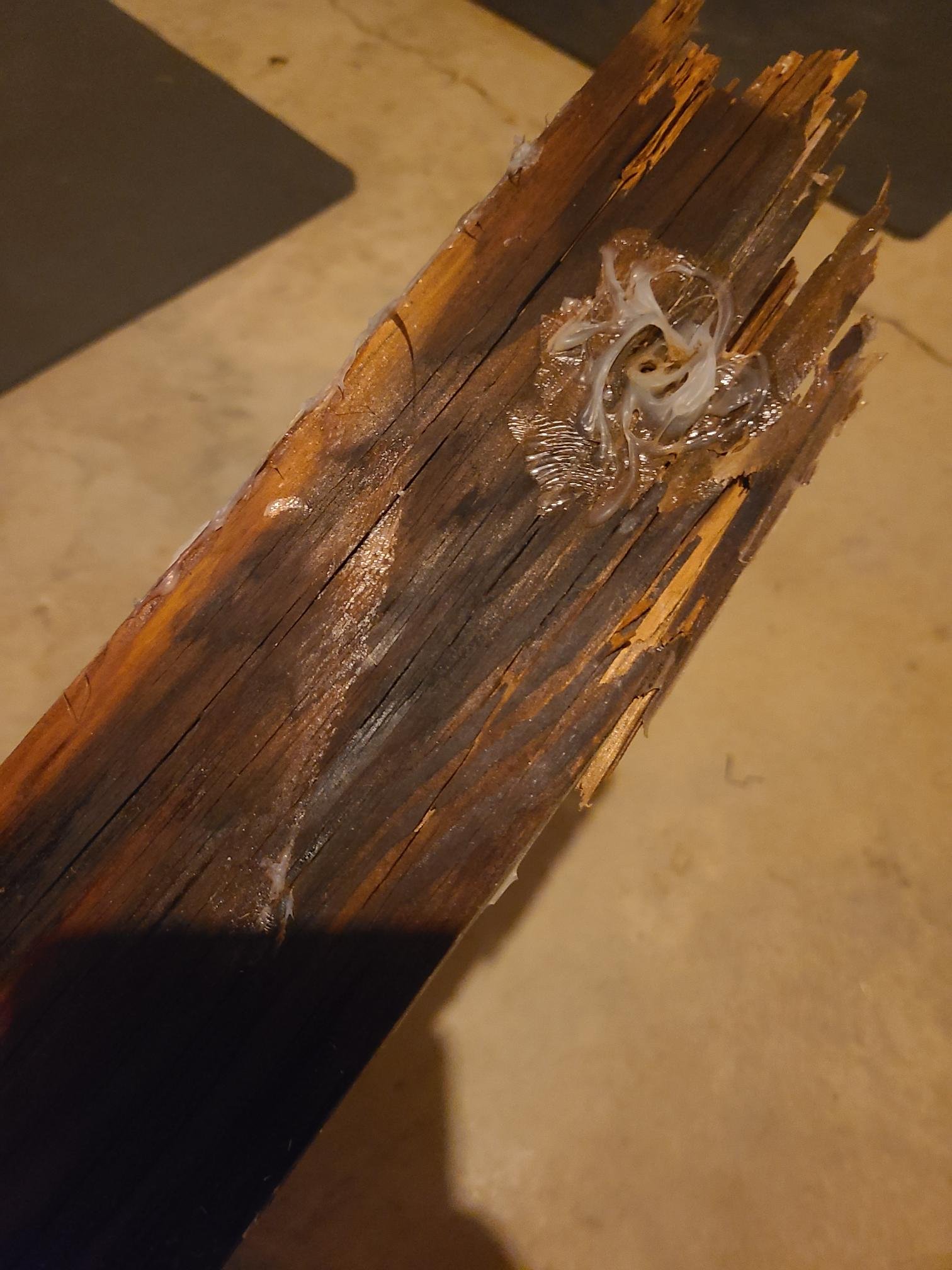
As each sheet of metal lifted, new evidence surfaced. Factory-installed fasteners were still intact—clean, dry, and properly sized—while the larger replacement screws from Rackley’s 2022 service had created widened holes, failed to seal, and allowed water to travel directly into the structure. Below the decking, the purlins showed signs of repeated saturation, mold colonization, and structural fatigue that had never been investigated despite multiple service visits and homeowner reports.
In the attic, the insulation confirmed the timeline: gray cellulose had deteriorated into heavy yellow clumps, damp even weeks after the last rainfall. Contractors consistently paused, recognizing the unmistakable signs of long-term moisture exposure. With every panel removed, the home’s interior damage aligned with the photographs, inspection notes, and water trails previously documented.
This stage of the project transformed speculation into proof.
It established, panel by panel, the exact mechanism of failure:
improper fasteners, unsealed penetrations, inadequate inspection practices, and unresolved leaks that accelerated rot over time.
The findings provide a clear, verifiable record of the deterioration—and a factual foundation for contrasting negligent workmanship with the corrective measures that followed. Link to full article